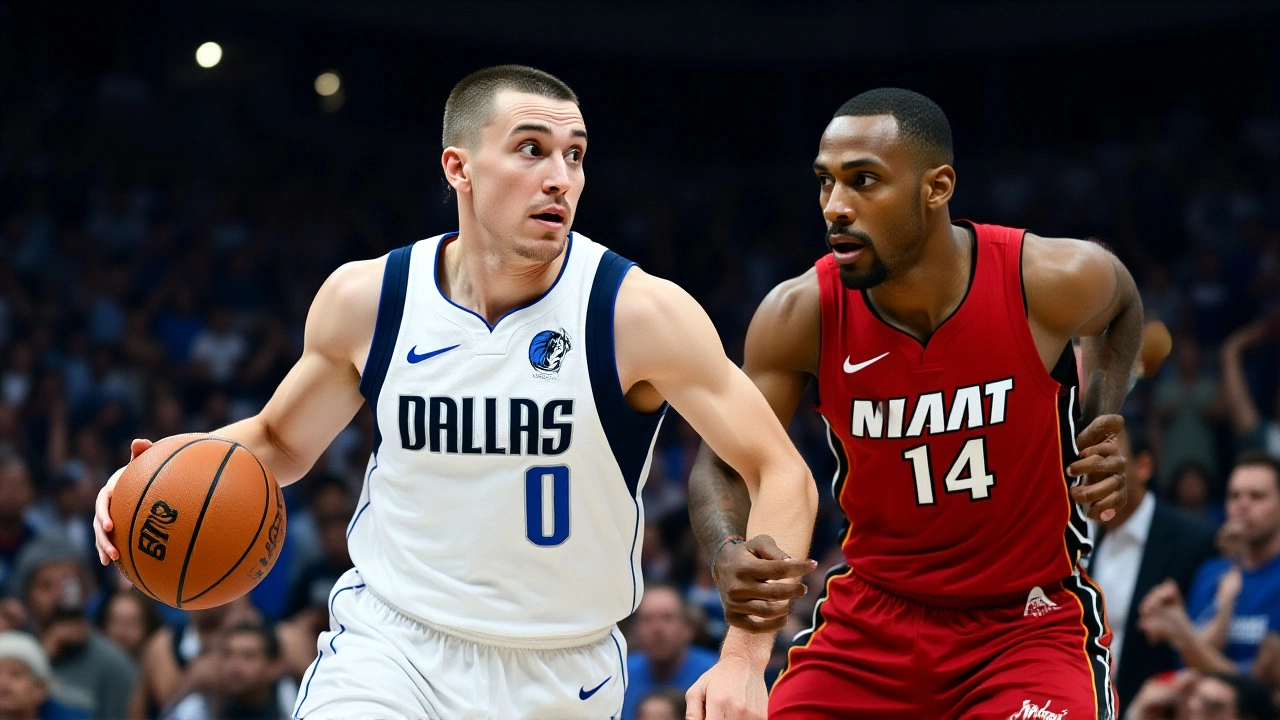
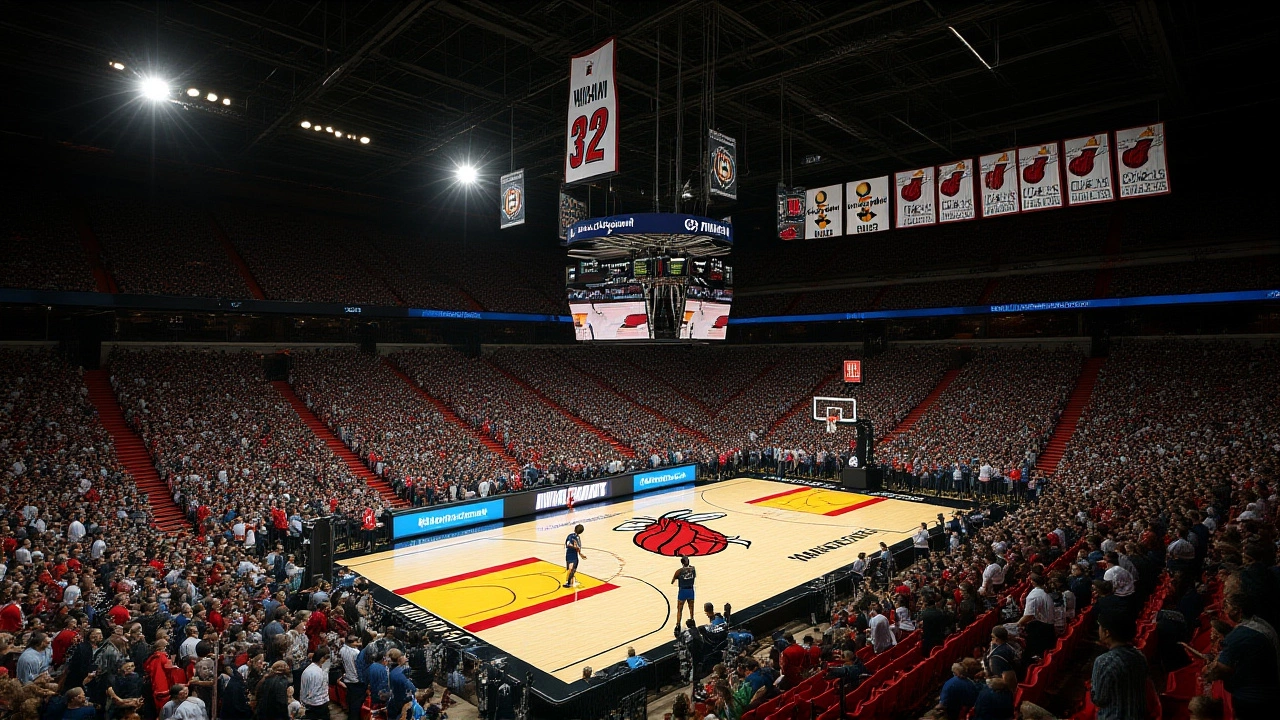
The Miami Heat held off a late surge from the Dallas Mavericks to win 106-102 on Monday night, November 24, 2025, at the Kaseya Center in Miami. The win wasn’t pretty—Miami scored nearly 20 points below their season average—but it was gritty, decisive, and defined by one of the most anticipated returns of the season: Tyler Herro, back from ankle surgery, dropping 24 points in his first game of the year. With 41.2 seconds left, Herro hit the go-ahead jumper after Bam Adebayo stole an inbound pass, sealing a win that kept the Heat perfect at home (8-1) despite playing their third game in four nights and missing three key players.
Adebayo’s Steal, Herro’s Moment
It wasn’t the flashiest finish, but it was the kind of play that wins tight games. With the score tied at 102-102 after Cooper Flagg sank two free throws with 1:04 left, the Mavericks looked poised to steal one on the road. But Adebayo, reading the pass like he’d seen it a hundred times, leapt into the lane and ripped the ball away from Brandon Williams. The Heat called timeout, set the play, and Herro, still limping slightly from his recovery, caught the inbounds pass at the top of the key, stepped back, and drained a mid-range jumper over P.J. Washington. The crowd erupted. The Mavericks never got another shot off.
Herro’s Return Was Worth the Wait
Herro hadn’t played since late October, sidelined by a high ankle sprain that required surgery and a six-week recovery. His return was the storyline before tip-off—and he didn’t disappoint. He hit four three-pointers, drove hard to the rim, and showed no signs of rust. He was aggressive without being reckless, scoring 12 of his 24 points in the fourth quarter. "He didn’t just come back—he came back with purpose," said Heat head coach Erik Spoelstra postgame. "That’s not a guy coming off surgery. That’s a guy who missed his team too much."
It wasn’t just Herro. Kel'el Ware dominated the glass with 20 points and 18 rebounds—his third double-double in four games—while Adebayo added 17 points, 9 rebounds, and the game’s most crucial defensive play. Miami’s bench, usually a strength, was thin: starters Norman Powell (groin), Andrew Wiggins (hip), and Nikola Jovic (hip) all sat out. Yet the Heat still outrebounded Dallas 48-42 and forced 17 turnovers.
Mavericks Fight Hard, But Depth Issues Show
For all their heart, the Mavericks couldn’t overcome their own roster holes. P.J. Washington led all scorers with 27 points, hitting tough shots all night, but he was often isolated against smaller defenders. Klay Thompson added 13 points, but just 3 in the second half. Max Christie and Brandon Williams each chipped in 12, but Dallas’ bench scored only 24 points total.
The bigger issue? Anthony Davis missed his 14th straight game with a strained left calf. Though upgraded to "doubtful" earlier Monday, he didn’t even travel to Miami. His absence leaves Dallas with no true rim protector or post scorer, and it shows: they rank 28th in the league in blocks per game (3.1) and allow 116.0 points per game. Without Davis, they’re a team that can score but can’t close.
Home Sweet Home for the Heat
Miami’s home court has become a fortress. Even without Powell—averaging 25.4 points per game—they’ve won eight straight at the Kaseya Center. Their defense, usually porous (118.9 points allowed per game), held Dallas to 41% shooting and forced 17 turnovers. The Heat’s 30.6 assists per game lead the Eastern Conference, and their ball movement was crisp, even in exhaustion.
They’ve now won four straight overall, despite playing six of their last eight games on the road. The schedule doesn’t get easier—next up: a back-to-back against the Boston Celtics and Milwaukee Bucks. But if Herro’s back, and Ware keeps playing like an All-Star, Miami might be more dangerous than their 14-14 record suggests.
What’s Next?
The Mavericks head to Los Angeles to face Davis’ former team, the Los Angeles Lakers, on Friday, November 28, 2025. They’ll need Davis to return soon—otherwise, their playoff hopes are slipping. The Heat, meanwhile, will look to extend their home streak against the Celtics on Wednesday, with Herro expected to play heavy minutes again. "He’s not 100%," Spoelstra admitted. "But he’s 100% fearless. And right now, that’s enough."
Frequently Asked Questions
How significant is Tyler Herro’s return for the Heat’s playoff chances?
Herro’s return is a major boost. He’s Miami’s most reliable off-ball scorer and clutch shooter, averaging 21.8 points per game last season. With Norman Powell out, Herro’s ability to create his own shot and stretch defenses gives the Heat much-needed offensive balance. If he stays healthy, Miami’s top-four seed in the East becomes realistic.
Why is Anthony Davis’ absence hurting the Mavericks so much?
Davis isn’t just a scorer—he’s a defensive anchor. Without him, Dallas allows 124.3 points per game in his absence, compared to 108.7 when he plays. They’ve lost six of seven games without him, and their rebounding has dropped from 48.1 to 42.3 per game. Their lack of rim protection also forces other players into defensive mismatches, draining energy.
How did Kel’el Ware manage 18 rebounds against a bigger frontcourt?
Ware, a 7’0" center, used timing and hustle over pure size. He’s averaging 10.6 rebounds per game this season, but Monday’s 18 were a breakout. He outworked Dallas’ reserves, especially Moussa Cisse, and capitalized on missed shots—Dallas had 14 offensive rebounds, but Ware grabbed six of them himself. His mobility lets him switch onto guards, making him a modern big man.
What does this win say about the Heat’s depth?
It proves they’re deeper than their injuries suggest. Without Powell, Wiggins, and Jovic, they still won a close game on the road against a team with higher offensive ratings. Kel’el Ware, Dru Smith, and even rookie Davion Mitchell stepped up. Miami’s bench depth, while thin on stars, is well-coached and disciplined—exactly what you need during a grueling schedule.
Why did the Mavericks lose despite scoring 102 points?
Turnovers and missed opportunities. Dallas committed 17 turnovers, leading to 22 Heat points. They also went 1-for-8 from three in the fourth quarter and missed three layups in the final 90 seconds. Even with P.J. Washington’s 27, their supporting cast froze late. In tight games, execution matters more than volume scoring.
What’s the significance of the Heat’s 8-1 home record?
It’s the best home record in the Eastern Conference. The Kaseya Center has become a fortress, especially with crowds energized by Herro’s return. Teams that win 8+ home games by December usually make the playoffs. For Miami, it’s not just about wins—it’s about building momentum, confidence, and a home-court advantage that could carry them deep into the postseason.